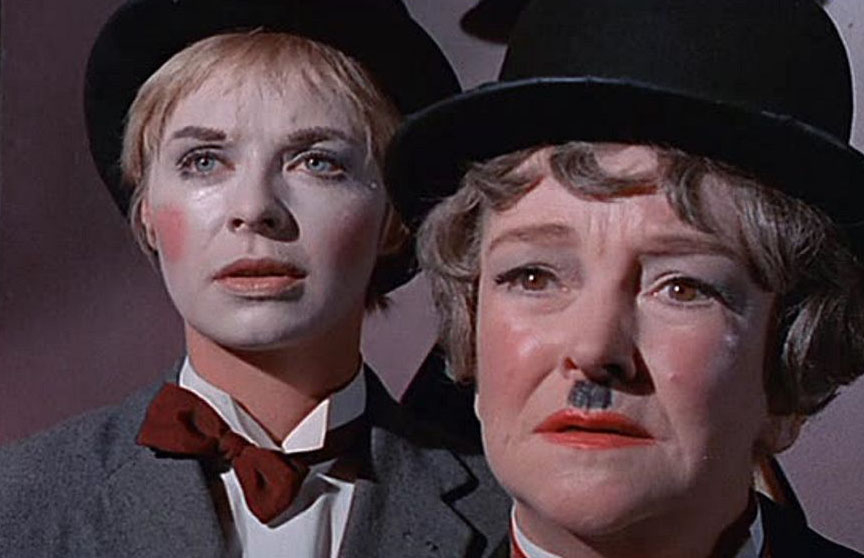
Showing posts with label Joe Orton. Show all posts

Tuesday, 16 October 2018

Joe, Kenneth and Mrs Edna Welthorpe


This Friday I am attending a very special event at London's Postal Museum. As part of the Bloomsbury Festival, I managed to grab a couple of tickets for Yours Faithfully Edna Welthorpe (Mrs) - Joe Orton's Prank Letters. 

I've been a fan of the late playwright Joe Orton since I first discovered him through Kenneth Williams' diaries. Kenneth and Joe were friends in the mid 1960s and although they shared some common attributes they were in many ways complete opposites. Both gay and from working class backgrounds, while Kenneth's private life was monk-like and the modern swinging sixties world around him both excited and repulsed him, Joe went for it and enjoyed being the glamorous toast of London. Joe became hugely famous thanks to two notorious plays - Loot and Entertaining Mr Sloane. Both plays shocked and intrigued contemporary audiences and have endured, becoming classics of their kind still often performed today.

Kenneth and Joe first met when Williams was cast in the first version of Joe's play Loot. Although the production was a disaster, the friendship endured and the pair even enjoyed trips abroad to more liberal environments. Having read both diaries and taken in these two famous, iconic men and their opinions of each other, we really can view them from a unique perspective. Kenneth was deeply shocked and affected by Joe's untimely death at the hands of Kenneth Halliwell in August 1967. It's worth reading his diary from around this time although it's pretty sober stuff. 


Joe was well known for producing deliciously camp, funny prank letters under the name of Mrs Edna Welthorpe and Kenneth was a regular receiver of these missives. The event on Friday will celebrate this aspect of Joe's creative outpouring in the company of several experts and Joe's sister, Leonie Orton. There will also be some new Edna letters, written by some well known comedy writers of today and a screening of a brand new animation on Edna, voiced by Alison Steadman. I'm particularly keen to hear what Leonie has to say as I've recently read her deeply touching, affecting and sometimes (darkly) hilarious memoir, I Had it in Me. I believe Joe would have loved the double meaning of this title. The memoir is as much about Leonie's own journey through life as it is about Joe and her thoughts about his life, his career and his untimely passing. 

I thoroughly recommend it to you and you can find it here

And you can read more about Kenneth and Joe in my blog from last year here 

And if you want more, here's a video of Kenneth Williams discussing Joe from the BBC Arena documentary A Genius Like Us: A Portrait of Joe Orton from 1982:


And finally, here's Leonie talking about her brother back in 2012:


I can't wait for Friday night to hear more about the brilliant Joe Orton, his life and work.

More on the Bloomsbury Festival can be found here: bloomsburyfestival.org.uk

You can follow me on Twitter @CarryOnJoan and on Instagram

Tuesday, 29 May 2018

From Stage to Screen: A new range of Pop Art Prints from Art & Hue


Art & Hue treads the boards for the new collection of stylish pop art inspired by plays adapted into films.

From the glitzy showbiz of musicals to the provocative black comedy of Joe Orton, Art & Hue has transformed images from the archives of Studiocanal into eight stylish pop art prints which celebrate iconic productions and actors.

All prints in the "From Stage to Screen" collection are available in three sizes and a wide choice of colour options, including a new combination of vibrant orange & purple inspired by posters from the 1968 production of "The Anniversary" starring Bette Davis.

The theatrical collection includes a re-imagined poster for the first all-British "talking picture" with sound released in 1929, "BlackMail" directed by Alfred Hitchcock, as well as Joe Orton's "Entertaining Mr Sloane" with Beryl Reid, Peter McEnery & Harry Andrews.


Screen doyenne Bette Davis in "The Anniversary" gets the Art & Hue treatment as does the cult B-movie sci-fi production of "Devil Girl From Mars" with Patricia Laffan.

The Edinburgh-set musical "Let's Be Happy" is pure Strictly-come-dancing ballroom glamour, with Tony Martin in his white tuxedo and Vera-Ellen as a high-kicking showgirl.

Completing the collection, ukelele king George Formby features in an illustrated reworking of "Turned Out Nice Again" and Barbara Windsor takes centre-stage as the prominent star of Joan Littlewood's Theatre Workshop production of "Sparrows Can't Sing".

A stylish way to bring the theatre into the home, the collection features Art & Hue's signature halftone style (halftone is an age-old technique that uses dots to make up the printed image, similar to newspapers or comic books).

Unlike traditional posters, which are printed on thin paper with inks that fade, Art & Hue creates giclée art prints, printed on 310gsm archival card, made from 100% cotton, with fine-art museum-grade pigment inks to last hundreds of years.


Usher stylish pop art prints into your home, exclusively online at artandhue.com/plays  

You can follow me on Twitter @CarryOnJoan on Facebook and on Instagram

Thursday, 1 March 2018

From Stage to Screen - Stylish Pop Art inspired by Film Adaptations of Stage Plays


Art & Hue treads the boards for the new collection of stylish pop art inspired by plays adapted into films.

From the glitzy showbiz of musicals to the provocative black comedy of Joe Orton, Art & Hue has transformed images from the archives of Studiocanal into eight stylish pop art prints which celebrate iconic productions and actors.

All prints in the "From Stage to Screen" collection are available in three sizes and a wide choice of colour options, including a new combination of vibrant orange & purple inspired by posters from the 1968 production of "The Anniversary" starring Bette Davis.

The theatrical collection includes a re-imagined poster for the first all-British "talking picture" with sound released in 1929, "BlackMail" directed by Alfred Hitchcock, as well as Joe Orton's "Entertaining Mr Sloane" with Beryl Reid, Peter McEnery & Harry Andrews.


Screen doyenne Bette Davis in "The Anniversary" gets the Art & Hue treatment as does the cult B-movie sci-fi production of "Devil Girl From Mars" with Patricia Laffan.

The Edinburgh-set musical "Let's Be Happy" is pure Strictly-come-dancing ballroom glamour, with Tony Martin in his white tuxedo and Vera-Ellen as a high-kicking showgirl.

Completing the collection, ukelele king George Formby features in an illustrated reworking of "Turned Out Nice Again" and Barbara Windsor takes centre-stage as the prominent star of Joan Littlewood's Theatre Workshop production of "Sparrows Can't Sing".

A stylish way to bring the theatre into the home, the collection features Art & Hue's signature halftone style (halftone is an age-old technique that uses dots to make up the printed image, similar to newspapers or comic books).

Unlike traditional posters, which are printed on thin paper with inks that fade, Art & Hue creates giclée art prints, printed on 310gsm archival card, made from 100% cotton, with fine-art museum-grade pigment inks to last hundreds of years.


Usher stylish pop art prints into your home, exclusively online at artandhue.com/plays  

You can follow me on Twitter @CarryOnJoan on Facebook and on Instagram

Sunday, 25 February 2018

Carry On Blogging Interview: Kaye Crawford on Beryl Reid


I have recently had the good fortune to be in touch with the writer Kaye Crawford, who back in 2016 published her biography of the late British actress Beryl Reid. Beryl is an actress I've seen countless times on television dramas and comedies and of course, in many films, such as Entertaining Mr Sloane, The Killing of Sister George and The Belles of St Trinian's. I was fascinated to find out more about Beryl's life both on stage and off so read on for much, much more...

First of all, can I ask you how you came to write your book, Roll Out The Beryl? What was the process like for you?

The strange thing is, I never thought I’d ever write a biography let alone a biography about the great Beryl Reid. I had retired from performing to focus on writing and I had written an article for a magazine about ‘Forgotten Funny Women’. Beryl was just one name on the list but oddly, she stayed with me and when I read her 1984 memoir ‘So Much Love’, I just knew there was something more to this woman that I wanted to explore. She was larger than life, eccentric, sensitive, determined, driven - vulnerable even. Beryl often said, “I hope they won’t forget me” and sadly, that’s exactly what seemed to happen after she died. So I decided that I would try to bring a little of that Beryl magic back and two years later, I had a book. 

The process of writing the book was just a wonderful experience. I have to say that it would never have happened had it not been for Beryl’s niece Sue who came on board right away and went above and beyond to help. But it’s a testament to how much Beryl was respected and loved that everyone I spoke to about her was thrilled to hear there would be a book and they couldn’t have been more eager to help make it a reality. I had access to the BBC Archives but also, Beryl’s pal Paul gave me access to B’s personal archive which was a treasure trove of information. And then I was truly lucky to have contributions from so many of Beryl’s colleagues; Barbara Windsor, Sian Phillips, Eileen Atkins, the late Terry Wogan, Maureen Lipman - the list just went on and on. I came to adore Beryl and I hope that she would happy with the book. 


I'd love to know more about how Beryl came to be an actress. What was her background like and what did she want to achieve in her career?

Beryl was a very precocious child. Not in a Veruca Salt way but in the true sense of the word. At a remarkably young age she had this very natural ability to make people laugh and at the age of 4 she told everyone who would listen that she was going to be an actress. Her father Leonard disapproved of that entirely. He wanted her to get a good job with a good pension and really had no time for anything even remotely connected with the theatre. By contrast, Beryl’s mother Annie was determined that Beryl should do exactly what she wanted to do. Annie Reid was something of a pioneer because she whilst wasn’t a Mama Rose type pushing her daughter onto the stage, she recognised that Beryl was special and she didn’t see why she should ignore that talent that she had. I think Leonard would have liked Beryl to have found herself a nice chap with a steady job and settle down as soon as possible. Annie thought that was nonsense. She even took on the role of Beryl’s first agent! 

I honestly don’t think Beryl could give two hoots for fame or fortune and she never really had time for the showbiz scene outside of her working life. I think that she just loved being on stage, creating characters and making people laugh. Some actors or actresses say “Oh I wanted to be just like….” But that wasn’t true in B’s case. She knew what she could do, she was very driven and she had that support she needed early on from Annie and also from her older brother Roy. That support meant that she never really had to consider any other career, it was always the theatre. Later on she did get a little frustrated that she wasn’t thought of for certain roles she knew she could do because she had been thought of for so long as “just” a comedienne but in her early career, she was doing pretty much everything. I think like so many others of her day, it was those years touring in variety that really shaped Beryl and made her the great actress she was. 

Beryl rose to fame on radio early in her career in the show Educating Archie. What can you tell me about that period?

Beryl absolutely loved radio as a medium and she’d actually had a lot of air time before she joined the cast of ‘Archie’. In fact, she once entered a competition to find fresh radio talent at the BBC in the late 1930s and was disqualified because (in the words of a BBC high up); “She’s performed everywhere on the BBC but the Director General’s bathroom!”. So she was known to the Beeb and I found an early report in the archives after an audition she did for them which said she was “probably going to be of some use in the future”. When ‘Archie’ came around, it was the most popular children’s show on the wireless and it had a huge following. Archie’s girlfriend had just left the show because the young actress playing the part had an offer to go to America. The BBC then had to find someone who could come in and take over. America got Dame Julie Andrews and we got Beryl Reid! 

Beryl had performed ‘Monica the Schoolgirl’ for about two or three years but ‘Archie’ really cemented that character in the public imagination. It was the perfect platform for Beryl and as audiences came to know her, the BBC realised that they were onto a good thing. Peter Brough (Archie) became fiercely protective of Beryl because he knew how integral she was to the show and he even sacrificed some of his own salary so that Beryl could get a pay rise and wouldn’t be tempted to move on. And from that came Marlene and other radio roles but also a move into early TV shows and then film. It was also around this point that her friendship with Hattie Jacques began which actually was one of the closest friendships B ever had. 


Beryl, while known for comedy, also made the transition into straight roles and serious dramatic performances. Other peers such as Joan Sims, Hattie Jacques or June Whitfield tended to stick to comedy parts - what attributes made Beryl different in this regard?

I think it’s more about the business at that time than it was the individual. Variety performers rarely crossed over to serious dramatic work and there was a lot of snobbery about it all. Beryl had long been pigeon holed as a comedienne but she saw herself more as a comedy actress. The word actress meant that she could do anything she put her mind to and I think it was a sort of relentless push to find the work she wanted and then convince people she could actually do it. She’d won a Tony Award for her role in Sister George but even then, she still wasn’t regarded by many as someone who could do a big dramatic role. That changed with Tinker Tailor and what that role actually did was to show audiences and the men with the money that she wasn’t just a one trick pony. Her colleagues had known that for years but the directors and producers and financiers? I think they got a shock. And quite rightly so. After that, Beryl did get lots of roles which were more serious and she just loved that. It meant a lot to her to be considered a “proper” actress who could do everything. Sadly it came a bit too late and Beryl’s health declined not long after that so that certain things became off limits. Someone told me a few months ago actually that Alec Guinness was quoted as saying that Beryl acted him off the set in Smiley’s People. That’s not a bad review is it?

Probably Beryl's most iconic screen role was in the then controversial, The Killing of Sister George. How did she come to take on that role and how did she view that production?

Everybody told Beryl not to take on Sister George when she was offered the play because it was such controversial material. When it first went on tour, it seemed like a complete disaster and it’s odd to consider that reaction to it now so many years later when social attitudes are so different. But Beryl always knew a good script when she saw one and I think that’s why she stuck with it. Beryl always maintained that she wasn’t playing a lesbian; she was playing a woman who just happened to be a lesbian. It’s worth noting that Beryl was incredibly open minded and she hated prejudice of any kind. When she was doing a play many years later, two old ladies approached her and said, “We loved you tonight Beryl, we’ve followed you for years. But we didn’t like that lesbian thing. That was disgusting”. Beryl snapped back, “Too close to home was it dear?” 

She loved Sister George and actually, it probably brought her the greatest reviews she’d ever had. When Bob Aldrich was casting for the film adaptation, he actually didn’t approach Beryl because he wanted someone like Barbara Stanwyck or Bette Davis. Davis refused and said, “That part belongs to Beryl Reid and nobody else”. And Sister George then led on to Mr Sloane, her favourite role, because I think it took her out of one world and put her into another. She didn’t mind edgy material as long as it was well written and she felt she could do a good job with it. Of course, there were limits to that and she could be a little contrary about what she found acceptable and what she didn't.


Another wonderful role was Kath in Joe Orton's Entertaining Mr Sloane. What can you tell me about that film and Beryl's performance?

Mr Sloane really is a shocker because if you were thinking about who could play this strange adult baby with a gay brother and a bisexual lodger with murderous leanings, the last person you’d think of would be Beryl Reid! And yet Beryl just loved that part. I think because it was so different and it gave her the opportunity to showcase everything she could do. She was also a huge fan of Joe Orton’s work and though she never met him, she always insisted that he was her favourite writer. Sloane also gave her a chance to work with Harry Andrews and actually, Beryl was more than a little sweet on Harry!

One person who wasn’t overkeen on Beryl’s take on the role however was Kenneth Williams. It’s so strange because Kenneth had been a huge fan of Beryl’s and always had nothing but nice things to say about her. I don’t think Dame Barbara will mind me relaying this but she told me that when Kenneth was casting for a production of Sloane he was going to direct, he offered her the part of Kath. Barbara Windsor declined because she said it was so identifiably Beryl’s part. Kenneth wasn’t best pleased and said; “I knew Joe and I know what he wanted. Kath should be played by a woman you want to fuck. And nobody wants to fuck Beryl Reid!”. He later wrote some pretty catty remarks about Beryl in his diaries too. I wonder what went wrong there and why he changed his mind on B so starkly? A mystery! really because the two had Hattie Jacques as a mutual friend and spent time together over the years. Beryl was very fond of him. 

On television, Beryl had several of her own variety comedy shows. Can you tell me a little more about those?

Somebody will no doubt correct me but as far as I could work out with the BBC, Beryl was in fact the first woman ever to host her own sketch show. Pat Kirkwood (a school chum of Beryl’s) had been the first woman to have her own TV show but that was more music and monologues. Beryl Reid Says Good Evening was more a sketch show we’d recognise today in the line of French & Saunders, Catherine Tate or Tracey Ullman. Beryl collated the entire show herself, she had a big say in casting, she chose the sketches, the writers, the music - everything.

The series also gave her a chance to work with Hugh Paddick. Their relationship was a very complex one and my book is the first time it’s really been explored in any detail. I think with that in mind, it makes ‘Good Evening’ slightly more poignant because it really is the two sides of the mask. There she was being incredibly funny and making people laugh and actually, behind the scenes, this rather sad situation was unfolding. Much of the series has been lost now but it’s quite important because it really did make a difference to other performers and pretty quickly after that you began to see shows hosted by other comediennes. It’s amazing to think that she was the star of the show when in the late 60s, most women in comedy were sort of “comedians labourers” where the men got the laughs and led the material whilst the women were imposing matrons, frustrated spinsters or bunny girls. It’s pretty groundbreaking when you think about it that way. 
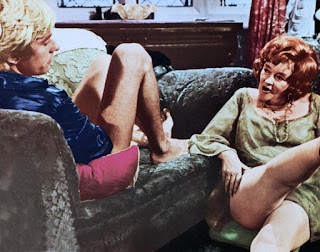

I must ask about Beryl's role as Mrs Valentine in Carry On Emmannuelle. Do you know what she thought about the part, and what are your thoughts on her involvement with the Carry On films at this stage?

I knew you’d ask this and I was dreading it slightly because though you and I adore the Carry Ons…..Beryl really didn’t! She was actually offered roles in them several times from around 1965 onwards and she always turned them down. Beryl was such a complex lady and sometimes, the decisions she made are hard to understand. Some of her own material was really quite near the knuckle for the time in which it was written and yet she admonished poor old Danny La Rue one night because she said he’d been too blue. With that in mind, she regarded the Carry Ons as too smutty and she didn’t think they were at all suitable for family audiences which is maybe why she turned them down with such regularity. It’s strange because she really was devoted to Hattie, she really liked Joan Sims and I think she would have loved being a part of that group had she given it a go. I think her argument was that whereas Mr Sloane was exclusively for adults, children might be watching the Carry Ons and she felt it was a bit too much.

Her appearance in Carry On Emmannuelle was really necessity I’m afraid. She was going through financial difficulties and her career was in a bit of a lull. This was just before Tinker Tailor and things got so bad that she had to sell her London apartment and her car. In that position, she couldn’t really afford to refuse anything (even though the Carry Ons were not well paid as you know) and that’s why she took on Carry On Emmannuelle. Personally I think she’s a welcome addition to the franchise and I would have loved to have seen her do more long before Emmannuelle. Unfortunately B didn’t feel the same and I’m sorry to say that she insisted that Emmannuelle wasn’t included in her CV after that. She did regret that decision to go into a Carry On and I think that’s sad because whilst I can’t say it’s one of my favourite Carry Ons, it’s lovely to see her there all the same. The experience of making the film however was one she did like. She had worked with Joan Sims on ‘Beryl Reid Says Good Evening’ and whilst she was closer to Hattie than to Joan when it came to the Carry On ladies, she really did respect Joan enormously and always jumped at the chance to spend time with her. I’m sorry I can’t give you happier news for your blog! 


I don't know very much about Beryl's stage career - can you tell me about some of her favourite roles?

Sister George and Sloane were probably the stage roles she'd be best known for but actually, Beryl’s favourite roles were in the Restoration Comedies which she had such a flair for. Mrs Malaprop and Lady Wishfort were particular favourites and she had some wonderful co-stars which was always important to the way Beryl worked. She was a slightly unpredictable performer when it came to theatre. Eileen Atkins and Sian Phillips both had first had experience of her breaking character and wandering down to the footlights to entertain the audience if she didn’t think the play was going all that well. She’d start doing Monica or Marlene and when she felt the audience was sufficiently warmed up, she’d go back to the script as if nothing had happened! She was a terrible flirt and was well known for making actors corpse if she could. When she was appearing with Donald Sinden in The Way of the World, she was wearing a very low cut dress with a corset that made the most of her assets shall we say. Moments before Sir Donald left the wings to go on, she whispered to him, “Would you like to wobble my tits for luck?”. And naturally he went onto the stage in hysterics. But she was incredibly well versed in the technical side of the business too. Lighting, scenery, props, sound - she knew what worked and what didn’t and she wasn’t afraid to tell a director so either! 

Without delving too much into her private life, I know Beryl lived for many years at the delightfully named Honey Pot Cottage on the banks of the Thames. What was her life like there?

I think that people think of Beryl as this strange little old lady who lived in a funny cottage on the banks of the Thames as a kind of Miss Haversham. Nothing could be further from the truth! Honeypot Cottage is a beautiful place but very very small. It’s more like a caravan than a house. But it was Beryl’s sanctuary from the world and she loved nothing more than hosting small dinner parties there or inviting old friends over to have a glass of “toff’s lemonade” by the river on a summer’s day. Most people know of B’s love for cats (she had 10 at one time!) but most people will be unaware that she was actually a gourmet cook and if she had time to herself, she was usually experimenting with new recipes. There are dents in the walls of Honeypot from numerous frying pans being hurled against them when things didn’t go quite right! 

Beryl was married twice and both ended in divorce sadly. She made a decision very on not to have children because she was scared that it would mean she couldn’t work anymore and would have to give up her career. That makes it sound as if Beryl was lonely but she absolutely wasn’t. Honeypot was never quiet unless she wanted it that way. One day you could row past and see her having a few drinks and a sing song with Peggy Mount or Harry Secombe and the next she’d be locked away there with the curtains drawn to avoid visitors. She said she suffered from “People Poisoning” when too many people crowded her and so when she was alone, that’s the way she wanted it. She said herself that she liked “men….and many of them!” And there were often new relationships on the horizon well into her 60s. But I think she was far too independent to consider marriage again and the life she made for herself at Honeypot was a happy and contented one. She certainly had no regrets. 
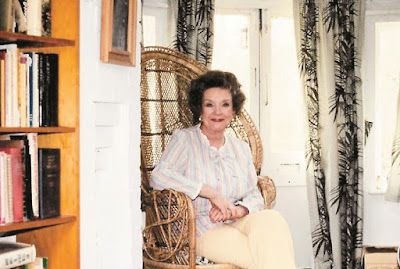
 
From researching Beryl and the life she led, how do you think she'd like to be remembered?

I think she’d like to be remembered not so much for her work but for her attitude to life. Her determination to succeed as a woman in a man’s world was made possible because of her great talent but she also needed to have courage and a confidence that let people know she wasn’t prepared to settle for anything less than what she’d set her mind to. I think she has been allowed to fade a little and that’s sad because really, she was legendary. Joan Sims and Hattie Jacques were both in very successful long running sitcoms and film franchises and Beryl never really had that so she’s not seen much on our screens anymore. But she deserves to be remembered for her unique talent and also for her zest for life. Beryl once said; “I never want them to be sick of me. I never want them to think ‘Oh there’s that silly old Beryl Reid again’. I want them to want me. Always”. And I think that’s a very touching quote because actually, I don’t know if she ever really understood how widely loved she really was.

Finally I'd love to know what's your own personal favourite out of all Beryl's roles?

I think for me, it’s actually a character she portrays in a sketch from Beryl Reid Says Good Evening. She wrote the sketch herself and it's remarkable. She’s a little cockney lady on her way back from bingo on a train and she’s seated between two very posh civil servants in bowler hats trying to do the Times crossword. Naturally the little old lady they've been so patronising towards is far more intelligent than they are and it's such a clever and witty take on the class divide. But also Beryl is also just simply delicious in it. It’s full of her own little ad-libs and other touches which make it so uniquely “Beryl”. It leaves me in hysterics every time I watch it and I know she was very proud of it. But there are so many and what I've tried to do with the book is not just walk people through her CV but to give some insight into what she was like as a person and how that made those great performances possible. There's always a little Beryl in every role she played and I have my favourites but really, it's just always a joy to see her again whatever she was doing.


I'd like to thank Kaye very much for taking the time to answer my questions. You can follow Kaye on Twitter @BerylReidOBE and you can purchase your copy of Roll Out The Beryl here


You can follow me on Twitter @CarryOnJoan on Facebook and on Instagram

Saturday, 10 February 2018

From Stage to Screen - Stylish Pop Art inspired by Film Adaptations of Stage Plays


Art & Hue treads the boards for the new collection of stylish pop art inspired by plays adapted into films.

From the glitzy showbiz of musicals to the provocative black comedy of Joe Orton, Art & Hue has transformed images from the archives of Studiocanal into eight stylish pop art prints which celebrate iconic productions and actors.

All prints in the "From Stage to Screen" collection are available in three sizes and a wide choice of colour options, including a new combination of vibrant orange & purple inspired by posters from the 1968 production of "The Anniversary" starring Bette Davis.

The theatrical collection includes a re-imagined poster for the first all-British "talking picture" with sound released in 1929, "BlackMail" directed by Alfred Hitchcock, as well as Joe Orton's "Entertaining Mr Sloane" with Beryl Reid, Peter McEnery & Harry Andrews.


Screen doyenne Bette Davis in "The Anniversary" gets the Art & Hue treatment as does the cult B-movie sci-fi production of "Devil Girl From Mars" with Patricia Laffan.

The Edinburgh-set musical "Let's Be Happy" is pure Strictly-come-dancing ballroom glamour, with Tony Martin in his white tuxedo and Vera-Ellen as a high-kicking showgirl.

Completing the collection, ukelele king George Formby features in an illustrated reworking of "Turned Out Nice Again" and Barbara Windsor takes centre-stage as the prominent star of Joan Littlewood's Theatre Workshop production of "Sparrows Can't Sing".

A stylish way to bring the theatre into the home, the collection features Art & Hue's signature halftone style (halftone is an age-old technique that uses dots to make up the printed image, similar to newspapers or comic books).

Unlike traditional posters, which are printed on thin paper with inks that fade, Art & Hue creates giclée art prints, printed on 310gsm archival card, made from 100% cotton, with fine-art museum-grade pigment inks to last hundreds of years.


Usher stylish pop art prints into your home, exclusively online at artandhue.com/plays  

You can follow me on Twitter @CarryOnJoan on Facebook and on Instagram

Saturday, 18 November 2017

Joe Orton Laid Bare on BBC Two


I know this isn't strictly a Carry On blog but I've long been fascinated by the life and work of the late playrwright Joe Orton. I first discovered Joe through his appearances in Kenneth Williams' diaries; the pair became great friends in the mid 1960s and Kenneth even starred in the first production of Joe's play Loot in 1965.

Joe and Kenneth shared an interesting bond despite having quite different outlooks on life and their lives. I went on to read Joe Orton's published diaries and have enjoyed several of his plays and the film of his life, Prick Up Your Ears. BBC Two are going to broadcast a special tribute documentary to Joe Orton next weekend, as part of commemorations of 50 years since his early, traumatic death. 

Joe Orton Laid Bare celebrates the wit, work and world of groundbreaking sixties playwright Joe Orton in his own words and those of friends and colleagues. 50 years since his murder at the hands of his lover Kenneth Halliwell, the film charts Joe's brief meteoric rise and tragic demise, and celebrates his unique comic voice as well as his significant role in the culture of 60s swinging London.

Antony Sher, Freddie Fox and Jaime Winstone lead an all-star ensemble cast, bringing to life excerpts of Orton's hilarious work for the TV generation, while Bryan Dick plays Orton himself, walking the viewer through the streets Joe inhabited and using his diary to revive the voice of one of Britain's most controversial comic writers.

The film builds to a tense and surprising conclusion as the circumstances of Joe's death are re-examined and new evidence reveals a sinister and powerful figure at the centre of events that led to his murder. Interviewees include Kenneth Cranham, Sir Michael Codron, Christopher Hampton, Patricia Routledge, Orton biographer John Lahr and Joe's sister Leonie.

Joe Orton Laid Bare will be broadcast on BBC Two on Saturday 25 November at 9pm. You can find out more about Joe Orton and his work at www.joeorton.org 


You can read my blog on the friendship between Kenneth and Joe here: Carry On Blogging: Kenneth and Joe

And you can read more on Kenneth's reaction to Joe Orton's death in 1967 in my blog here: Carry On Blogging: July 1967 through the eyes of Kenneth Williams 

You can follow me on Twitter @CarryOnJoan on Facebook and on Instagram

Thursday, 27 July 2017

July 1967 through the eyes of Kenneth Williams


Today marks the fiftieth anniversary since The Sexual Offences Act received royal assent. This piece of legislation decriminalised homosexual acts in private between two men, both of whom had to have reached the age of 21. The Act only applied to England and Wales and did not cover the Merchant Navy or the Armed Forces. The law did not come into force either in Scotland until 1980 and Northern Ireland two years after that.

Why am I writing about this on a blog all about the Carry On films? Well, apart from it being a momentous moment in the recent history of the United Kingdom, it also had a real, tangible effect on some of the Carry On cast. While the Carry Ons remained light, fluffy confections of ribaldry, innuendo, boobs and bums, the times were certainly a-changing during their long reign at the box office. The coy post-war era of Carry On Sergeant was definitely history by the time this law was passed nearly ten years later. While gay characters were never really covered in the Carry Ons in any great depth (John Clive and David Kernan being the closest thing we got to any kind of gay couple in the world of Pinewood comedy), leading actors Kenneth Williams and Charles Hawtrey both dealt with being gay and in the public eye at a time when society at large deemed it completely unacceptable.


Kenneth and Charles were never ever gay in the Carry Ons. Yes their characters were always camp and outrageous but the same could be said for Hattie Jacques, Barbara Windsor or Joan Sims. Kenneth's sexuality in the Carry Ons was never touched upon although one had to suspend disbelief when his Carry On Abroad character was seen coupling off with Gail Grainger's Moira at the end of that particular film. Kenneth Williams was usually playing it over the top and it was very camp but it was with a small "c". Charles Hawtrey was camp with a very big "C" but still not portrayed as a homosexual. He was the loner, normally apart from the group and often the mummy's boy. In real life both Williams and Hawtrey took entirely different approaches to their sexuality. 

By all accounts Charles relished who he was and what that meant, becoming a well-known and flamboyant figure when he set up home in the seaside town of Deal in Kent. Hawtrey enjoyed his private life at a time when it was still perilous to do so and although he lived a troubled life, I do hope his freedom to enjoy who he was gave him some light in the darkness. We know more about Kenneth Williams and his attitudes thanks to his infamous, beautifully written diaries, which provide as much of a social commentary on the modern age as any other document. And hardly any other document could be quite so entertaining. Williams, close to his mother, outwardly confident, intelligent and beloved, lived a simple life in private fighting between his strong faith and working class roots and the knowledge that he was always a bit different from those around him. Much of Kenneth's adult life seemed pitched into an inner torment that is sometimes agonising to read about, let alone actually live through. 


I try not to write in too much detail about the private lives of actors I've long been fond of. That's not what this blog is about. You can go elsewhere for biographies, documentaries and dramas that rake over the coals of lives lived. This is and will always be more of a celebration of these wonderful performers who still provide so much entertainment, joy and comfort so long after they have left us. However, on this momentous day, I found myself picking up my rather weathered, well-worn copy of Kenneth Williams' Diaries to see how he reacted to the decriminalisation back in July 1967. 

On Thursday 13 July, Kenneth acknowledged the news that the House of Lords had passed the bill, brought forward by Leo Abse:

The Lords have passed Leo Abse's bill, legalising homosexuality in England: It's all right between two consenting adults in private except the services! and in Scotland. So it won't do any good for the queens of Dundee and the like.

On Sunday 23 July, Kenneth was with the playwright Joe Orton and his longterm partner Kenneth Halliwell at their flat in Noel Road, Islington:

Went up to see Joe Orton & Kenneth. They were v. kind. We chatted about homosexuality and the effect the new clause would have. We agreed it would accomplish little. 

Sadly, none of these men would see the benefits the change in the law would finally bring about. Just over two weeks later, Kenneth Williams received the following news:

John Hussey telephoned me at 4.45, he'd read in the paper that Joe Orton and Kenneth Halliwell are dead. Apparently it is a murder and a suicide. The BBC wanted me to go on TV and talk about Joe, but the Police will not name Joe Orton as being dead so the programme has been cancelled...I said no to the BBC anyway. I couldn't talk about Joe in public - not at the moment.

Kenneth did eventually talk to the BBC about his association with Orton and Halliwell, in the 1982 Arena programme - A Genius Like Us: A Portrait of Joe Orton. Kenneth discusses how they met, the relationship between the couple and their sad end:


While Orton and Halliwell left this world not long after the law was changed, Kenneth Williams did live on to experience the greater freedoms and changes in culture it brought about. He would witness the liberalisation of many aspects of British life however sadly, for whatever reason could never quite become involved himself. I often wonder what Kenneth would make of the world today - I think we miss his acerbic Willo' the Wisp take on things more keenly as time passes.

While people like Joe Orton were fuelled into creativity by their sexuality both publicly and privately, the likes of Hawtrey, Williams and Frankie Howerd forged careers as part of the establishment, making us laugh until we cried. We all knew they were gay but it was never really discussed. Kenneth's unique stranglehold on camp comedy at the BBC was challenged by the late 1970s as more flamboyant and openly gay performers like John Inman (or that Inman creature as Kenneth called him in 1977) appeared on the scene. However, for me, he will always be the master.


We all owe a huge debt of gratitude to these talented, complex, sometimes troubled and tortured men. Not only have they left us a huge legacy of fun and laughter, but they also paved the way, living through extremely challenging, unfair times and bridging the gap to equality. 

See also: Carry On Blogging: Kenneth and Joe 

And: Carry On Blogging: Carry On ... Camping?

You can follow me on Twitter @CarryOnJoan on Facebook and on Instagram
 

Thursday, 25 February 2016

Kenny at 90: Kenneth and Joe


I have long been fascinated by the life of Kenneth Williams. He was a sublime comedy actor and lively personality, full of contradictions and complications. Unlike many of his contemporaries we know so much more about Williams and in his own words, because of his infamous diaries. Spanning his entire adult life, he is the modern day diarist and they have become his main legacy.

I have written before about some of Kenneth's most enduring friendships, namely with Maggie Smith and Gordon Jackson. One other friendship has always intrigued me too and that's his bond with the playwright Joe Orton. Orton was the sensational new young writer of the mid 1960s. Openly gay and proud of it, he relished his fame and his contentment with his own sexuality. He was the darling of the West End theatre scene until his life was cut tragically short at the hands of his long-term lover Kenneth Halliwell in August 1967.


I have read Orton's diaries and seen some of his plays and he is a fascinating character, very much of his time. He shook up the theatre scene in this country, challenged long held ideals and deliberately provoked, shocked and in some cases, appalled. He was an imp of a character and it's hard not to delight in his behaviour. What fascinates me even more is the relationship that developed between Kenneth Williams and Joe. They were both gay, working class and working in the arts but apart from that they were very much polar opposites. While Joe embraced his sexuality at every given opportunity, Kenneth shied away from that area of his life. Joe did and said what Kenneth never would or could. 

When they first met in 1964, introduced by theatrical impresario Michael Codron, Kenneth was at the height of his success. He was the star of the Carry On films, was a big name on radio thanks to his association with Tony Hancock and Kenneth Horne and had several theatrical successes under his belt, most notably the double bill The Private Ear and The Public Eye with Maggie Smith. Williams was growing dissatisfied with the work he was being offered and seized on the opportunity to work with the new young playwright. He admired Joe from the start and they became close.


Unfortunately, accepting a role in Orton's latest work, Funeral Games, did not turn out to be a happy experience for anyone connected with the project. The play, in which Kenneth starred with Geraldine McEwan, Duncan Macrae and Ian McShane, toured the provinces in early 1965 but was not a success. Most of the middle class audiences either didn't understand it or quite simply were shocked by it and walked out. These days are recorded in Williams' diaries and he was undoubtedly miserable. Fortunately his friendship with Orton endured despite this painful flop and they even spent time together in Morocco, one of Orton's favourite holiday destinations. They remained in touch even when, the following year, the now retitled Loot became an overnight sensation, taking the West End by storm with a new cast. 

Although Kenneth and Joe would not work together again, they socialised regularly over the next few years. Other friends of Williams thought Joe was rather self-obsessed however Kenneth was obviously caught up in the youthful glamour that came along whenever Joe was around. I've always loved the descriptions of Kenneth's regular visits to Orton's flat at Noel Road in Islington, the home he shared with his lover Kenneth Halliwell. Williams was much closer to Joe and he seemed wary of Halliwell on occasions, sometimes quietly pitying the older man. I think Kenneth Williams envied aspects of Joe's life, wishing he could enjoy himself more and be more like him, however what happened next put any ideas of that firmly on the back burner.


In August 1967, Kenneth Halliwell murdered Joe before taking his own life. Halliwell had been depressed for some time, feeling isolated and threatened by Orton's great success in life. The news came as a massive blow to Kenneth Williams and it caused him to reflect a great deal on their lives and his own life choices. 

Many years later Williams would direct two of Joe's plays at Hammersmith. I often wonder what Orton would have made of Kenneth's efforts. I also wonder what would have become of Joe Orton had he lived. He was undoubtedly a talented writer who was making a name for himself, but was he just very much of his time? His plays are still produced to this day so there is still an audience for his work. If Orton was still with us today he would be 82 so could still be active in the world of theatre. Sadly, we'll never know.

I will always be fascinated by the friendship that developed between Joe Orton and Kenneth Williams. Two men who shared so many common experiences but lived their lives very differently. 

To end, here's a clip of Kenneth Williams discussing Joe Orton in a BBC documentary from the early 1980s.


You can follow me on Twitter @CarryOnJoan 

Sunday, 29 November 2015

Kenneth and Joe


I have long been fascinated by the life of Kenneth Williams. He was a sublime comedy actor and lively personality, full of contradictions and complications. Unlike many of his contemporaries we know so much more about Williams and in his own words, because of his infamous diaries. Spanning his entire adult life, he is the modern day diarist and they have become his main legacy.

I have written before about some of Kenneth's most enduring friendships, namely with Maggie Smith and Gordon Jackson. One other friendship has always intrigued me too and that's his bond with the playwright Joe Orton. Orton was the sensational new young writer of the mid 1960s. Openly gay and proud of it, he relished his fame and his contentment with his own sexuality. He was the darling of the West End theatre scene until his life was cut tragically short at the hands of his long-term lover Kenneth Halliwell in August 1967.


I have read Orton's diaries and seen some of his plays and he is a fascinating character, very much of his time. He shook up the theatre scene in this country, challenged long held ideals and deliberately provoked, shocked and in some cases, appalled. He was an imp of a character and it's hard not to delight in his behaviour. What fascinates me even more is the relationship that developed between Kenneth Williams and Joe. They were both gay, working class and working in the arts but apart from that they were very much polar opposites. While Joe embraced his sexuality at every given opportunity, Kenneth shied away from that area of his life. Joe did and said what Kenneth never would or could. 

When they first met in 1964, introduced by theatrical impresario Michael Codron, Kenneth was at the height of his success. He was the star of the Carry On films, was a big name on radio thanks to his association with Tony Hancock and Kenneth Horne and had several theatrical successes under his belt, most notably the double bill The Private Ear and The Public Eye with Maggie Smith. Williams was growing dissatisfied with the work he was being offered and seized on the opportunity to work with the new young playwright. He admired Joe from the start and they became close.


Unfortunately, accepting a role in Orton's latest work, Funeral Games, did not turn out to be a happy experience for anyone connected with the project. The play, in which Kenneth starred with Geraldine McEwan, Duncan Macrae and Ian McShane, toured the provinces in early 1965 but was not a success. Most of the middle class audiences either didn't understand it or quite simply were shocked by it and walked out. These days are recorded in Williams' diaries and he was undoubtedly miserable. Fortunately his friendship with Orton endured despite this painful flop and they even spent time together in Morocco, one of Orton's favourite holiday destinations. They remained in touch even when, the following year, the now retitled Loot became an overnight sensation, taking the West End by storm with a new cast. 

Although Kenneth and Joe would not work together again, they socialised regularly over the next few years. Other friends of Williams thought Joe was rather self-obsessed however Kenneth was obviously caught up in the youthful glamour that came along whenever Joe was around. I've always loved the descriptions of Kenneth's regular visits to Orton's flat at Noel Road in Islington, the home he shared with his lover Kenneth Halliwell. Williams was much closer to Joe and he seemed wary of Halliwell on occasions, sometimes quietly pitying the older man. I think Kenneth Williams envied aspects of Joe's life, wishing he could enjoy himself more and be more like him, however what happened next put any ideas of that firmly on the back burner.


In August 1967, Kenneth Halliwell murdered Joe before taking his own life. Halliwell had been depressed for some time, feeling isolated and threatened by Orton's great success in life. The news came as a massive blow to Kenneth Williams and it caused him to reflect a great deal on their lives and his own life choices. 

Many years later Williams would direct two of Joe's plays at Hammersmith. I often wonder what Orton would have made of Kenneth's efforts. I also wonder what would have become of Joe Orton had he lived. He was undoubtedly a talented writer who was making a name for himself, but was he just very much of his time? His plays are still produced to this day so there is still an audience for his work. If Orton was still with us today he would be 82 so could still be active in the world of theatre. Sadly, we'll never know.

I will always be fascinated by the friendship that developed between Joe Orton and Kenneth Williams. Two men who shared so many common experiences but lived their lives very differently. 

To end, here's a clip of Kenneth Williams discussing Joe Orton in a BBC documentary from the early 1980s.


You can follow me on Twitter @CarryOnJoan 

Clicking on the adverts helps to keep this blog going.