Showing posts with label Raising The Wind. Show all posts

Sunday, 13 November 2016

The Pinewood Rep Company - Joan Hickson


One of the joys for me of the Carry Ons and all the comedy films turned out during their long reign was the continuity provided by the reliable Pinewood Rep Company. Oh this was never a formal company of actors, if faces reappeared it was because Peter Rogers and Gerald Thomas could trust them to turn up on time, say the words in the right order (and only once) and accept the low pay terms in return for regular work and friendly circumstances.

While the same faces appeared again and again in the Carry Ons, many often also crossed over and worked for Peter's wife Betty and Gerald's brother Ralph on their productions. A quick bit of research shows that during the 1950s and 60s in particular, many actors went back and forth between the two successful stables with somewhat alarming regularity! So let's take a look at one of my own personal favourites: Joan Hickson.


I've often remarked just how much I admire the late, great Joan Hickson. She came into her own as Agatha Christie's Miss Marple in those twelve definitive BBC dramatisations in the 1980s and early 1990s. Yet before that late rise to stardom, Hickson worked tirelessly for decades on television, film and in the theatre and built up an impressive backlog of appearances. We all know that Joan popped up in five Carry Ons - her most significant role being her first, as Sister in 1959's Carry On Nurse. She quickly returned for memorable cameos in Constable at the end of 1959 and Regardless in 1960. After a decade of being busy elsewhere, she came back to Pinewood to play Jenny Grubb's overbearing mother in one of my favourite scenes in the 1970 film Carry On Loving. Three years later she turned up in Girls playing the absent minded Mrs Dukes, hired by Peter Rogers at extremely short notice after Renee Houston had to withdraw due to ill health.

However Joan Hickson also cropped up in numerous other titles produced by both Peter Rogers and his wife Betty Box. In total, she made thirteen films for the couple. Her association with the duo actually lasted nearly twenty years, with her first appearance dating back to the 1954 film Doctor In The House. This was the first in the hugely successful Doctor series and saw Joan play Mrs Groaker, mother to the young Milly, played by rising starlet Shirley Eaton. A year later Joan was back at Pinewood again for the sequel, Doctor At Sea. In this film, another cameo role for Joan, she again played a rather overbearing mother, Mrs Thomas. Her offspring this time was played by none other than Joan Sims. Dirk Bogarde's Simon Sparrow was lodging with the Thomas family and escaped to sea in order to avoid the daughters' advances!


The same year she made Nurse, Joan also played a small role in a colour adaptation of The 39 Steps, made at Pinewood by Ralph and Betty. In this Kenneth More epic she played Miss Dobson. That year was a busy one in the association between Hickson and the Rogers/Box Rep Company. Two more film appearances quickly followed. First of all, as Rosemary in the Betty Box Michael Craig vehicle Upstairs and Downstairs and then later that year she played a rather posh, snobbish saleswoman opposite Ted Ray and Dilys Laye in the undervalued comedy Please Turn Over.

In 1960 Joan once again returned to the Doctor series, for the third time - this time Doctor In Love. Although an uncredited role, Hickson does share several scenes with leading man Michael Craig near the beginning of the film, playing his nurse. The following year Joan had a small part in the Bruce Montgomery music school comedy Raising The Wind. Joan worked for the Pinewood Rep company once again in 1963 when she played the nosy char lady Mrs Wood in the delightfully light district nurse comedy film Nurse On Wheels, starring Juliet Mills, Joan Sims and Esma Cannon.


Joan Hickson was without a doubt a highly prolific character actress in British film at this time, equally adept at light comedy as she was at high drama. Looking back at her performances in these films, however brief, you can see the star quality shining through. She was always a highlight in these films and a sign of quality. No wonder Peter Rogers and Betty Box called on her services so often over the years.

I'll be back soon with another blog in these series looking back at another prolific member of the Pinewood Rep Company.


You can follow me on Twitter @CarryOnJoan and also on Facebook


Sunday, 21 February 2016

Whatever Happened To ... Bruce Montgomery?


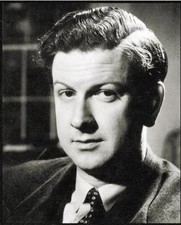
Bruce Montgomery is another forgotten figure from the glorious Carry On legacy. While Eric Rogers is the Carry On music supremo, Montgomery was the original composer for the series and deserves some credit for setting the tone.

Bruce Montgomery is credited with providing the musical scores for the first six Carry On films. He is responsible for creating that iconic theme tune which graced all the films from Sergeant to Cruising, with modifications along the way. I love the original theme tune and although I can see why they changed it over time, the jazzed up version which introduced Teacher, Constable and Regardless remains a firm favourite for me.


Montgomery also provided the musical scores for several other Rogers and Thomas productions at around the same time. The scores for Please Turn Over (1959), Watch Your Stern (1960) and Twice Round The Daffodils (1962) are also down to Bruce. Not only that, but the score and the screenplay for the 1961 film Raising The Wind came from the original Carry On music man. Montgomery certainly made a significant contribution to the early years of Carry On.

In addition to these credits, Bruce Montgomery also composed music for films produced by Peter Rogers' wife, Betty Box. Those included four of the famous Doctor films - Doctor in the House in 1954, Doctor at Sea the year after, Doctor at Large in 1957 and finally Doctor in Love in 1960. He was a busy man at Pinewood in the late 1950s and early 1960s. So what caused Montgomery and Peter Rogers Productions to part ways? 

Apparently Montgomery decided to stop working on the Carry On compositions as he was, by the early 1960s, struggling to achieve the right contemporary sound Rogers and Thomas were looking for. Enter Eric Rogers for the next 22 films! Sadly, Bruce Montgomery was also suffering from illnesses relating to alcohol, something which was plague the final years of his life. 


Apart from his love of music, Bruce Montgomery also had a second fruitful career as an author of crime fiction. Under the pseudonym of Edmund Crispin, he produced nine detective stories and two collections of short stories. His titles included The Case of the Gilded Fly (1944); The Moving Toyshop (1946); Love Lies Bleeding (1948) and The Long Divorce (1952). As Crispin, he also edited seven volumes entitled Best Science Fiction, published during the 1950s.

Sadly, Montgomery's output in both careers began to falter as the 1960s dawned. He did continue to review books for The Sunday Times, but other than that he faded into obscurity. The last decade of his life saw him move to Devon, latterly the village of Dartington. In 1976 he married his long-term secretary, Ann. However they would only enjoy two years of married life together before his death at the age of just 56. Years of heavy drinking had taken its toll on Montgomery.


I think it's a shame that Bruce Montgomery's contribution to the Carry On legacy isn't always given the credit it is due. Although Eric Rogers was a master at creating the right musical backdrop to the onscreen antics of the gang, Montgomery also crafted some excellent pieces of music for those more innocent, early black and white Carry On films. 

You can follow me on Twitter @CarryOnJoan

Wednesday, 13 January 2016

From the Archive: Not Quite A Carry On - Raising The Wind


I have been blogging about some of the many other films Peter Rogers and Gerald Thomas produced and directed together during their long professional relationship. So far we have looked back at the likes of Nurse On Wheels, The Big Job and Bless This House. Today I'm going back a little further - Raising The Wind!

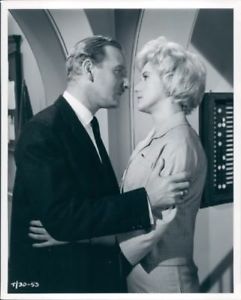
Yes quite. Raising The Wind is actually a rather cosy, early 1960s comedy film following the exploits of a bunch of rather mature looking young music students. It very much has the feel of one of the Doctor In The House films and features a large cast of well known comedy actors. Interestingly, Rogers and Thomas called upon then Carry On music man, Bruce Montgomery, to write the script for this film. And he does a fair job of it too.


Like many of of Rogers and Thomas' ensemble comedies, there isn't really much plot to speak of here. A group of ambitious young musicians progress through music school with the climax of the film revealing which ones pass their final exams. There is lots of terrific light comedy sprinkled throughout but as usual it is the quality of the performers that really raises the bar. 

The film boasts starring roles for several actors who were then Carry On regulars. They include Liz Fraser, Kenneth Williams, Leslie Phillips (who had just made his final Carry On until Columbus in 1992), Eric Barker and Sid James in a wonderful cameo role alongside Lance Percival as a pair of dodgy music producers. Heading up the cast and bridging the gap between Doctor and Carry On franchises is a larger than life performance from the legendary James Robertson Justice, who brings his bombastic Lancelot Spratt character to life once again. 


Also along for the ride are Paul Massie, Jennifer Jayne and Jimmy Thompson, who join Fraser, Phillips and Williams as the music students. Jimmy Thompson would appear in three Carry Ons, Regardless, Cruising and Jack, but has his largest role here as Alex. Canadian Paul Massie made many films during this time but later moved to Florida and became a theatre Professor at a University. Finally, the glamorous Jennifer Jayne who made her only appearance for Rogers and Thomas in this film. She was known at the time for working alongside Dirk Bogarde in the classic The Blue Lamp and Norman Wisdom in the film On The Beat. 

Despite the fact the film has no major plot to speak of it is still a joy to watch mainly due to the supporting cast which is crammed with regular faces from the Carry On/Doctor group of repertory players. Look out for the likes of Geoffrey Keen, Joan Hickson, Esma Cannon, Victor Maddern, David Lodge, Brian Oulton and the very first appearance from future Carry On legend, Jim Dale. As always, these Pinewood stalwarts knew how to cast a film economically with expert and experienced talents.


Without a doubt the high point of Raising the Wind is the scene which sees Kenneth Williams attempt to conduct an orchestra. It is a masterpiece of comic acting and timing and shows Kenneth at his comedic peak. I love it and can watch it again and again.

So there we are, Raising the Wind. Nothing extraordinary but yet again Peter and Gerald give us something that rises up above the average thanks to a wonderful cast of comedy performers at the top of their game. And to finish, here is that wonderful scene of Kenneth Williams taking on the role of conductor!


Please click on the link to vote for Carry On Blogging in the UK Blog Awards


You can follow me on Twitter @CarryOnJoan and also on Facebook


Tuesday, 9 June 2015

Not Quite A Carry On: Raising The Wind


I have been blogging about some of the many other films Peter Rogers and Gerald Thomas produced and directed together during their long professional relationship. So far we have looked back at the likes of Nurse On Wheels, The Big Job and Bless This House. Today I'm going back a little further - Raising The Wind!

Yes quite. Raising The Wind is actually a rather cosy, early 1960s comedy film following the exploits of a bunch of rather mature looking young music students. It very much has the feel of one of the Doctor In The House films and features a large cast of well known comedy actors. Interestingly, Rogers and Thomas called upon then Carry On music man, Bruce Montgomery, to write the script for this film. And he does a fair job of it too.


Like many of of Rogers and Thomas' ensemble comedies, there isn't really much plot to speak of here. A group of ambitious young musicians progress through music school with the climax of the film revealing which ones pass their final exams. There is lots of terrific light comedy sprinkled throughout but as usual it is the quality of the performers that really raises the bar. 

The film boasts starring roles for several actors who were then Carry On regulars. They include Liz Fraser, Kenneth Williams, Leslie Phillips (who had just made his final Carry On until Columbus in 1992), Eric Barker and Sid James in a wonderful cameo role alongside Lance Percival as a pair of dodgy music producers. Heading up the cast and bridging the gap between Doctor and Carry On franchises is a larger than life performance from the legendary James Robertson Justice, who brings his bombastic Lancelot Spratt character to life once again. 


Also along for the ride are Paul Massie, Jennifer Jayne and Jimmy Thompson, who join Fraser, Phillips and Williams as the music students. Jimmy Thompson would appear in three Carry Ons, Regardless, Cruising and Jack, but has his largest role here as Alex. Canadian Paul Massie made many films during this time but later moved to Florida and became a theatre Professor at a University. Finally, the glamorous Jennifer Jayne who made her only appearance for Rogers and Thomas in this film. She was known at the time for working alongside Dirk Bogarde in the classic The Blue Lamp and Norman Wisdom in the film On The Beat. 

Despite the fact the film has no major plot to speak of it is still a joy to watch mainly due to the supporting cast which is crammed with regular faces from the Carry On/Doctor group of repertory players. Look out for the likes of Geoffrey Keen, Joan Hickson, Esma Cannon, Victor Maddern, David Lodge, Brian Oulton and the very first appearance from future Carry On legend, Jim Dale. As always, these Pinewood stalwarts knew how to cast a film economically with expert and experienced talents.


Without a doubt the high point of Raising the Wind is the scene which sees Kenneth Williams attempt to conduct an orchestra. It is a masterpiece of comic acting and timing and shows Kenneth at his comedic peak. I love it and can watch it again and again.

So there we are, Raising the Wind. Nothing extraordinary but yet again Peter and Gerald give us something that rises up above the average thanks to a wonderful cast of comedy performers at the top of their game. And to finish, here is that wonderful scene of Kenneth Williams taking on the role of conductor!


You can follow me on Twitter @CarryOnJoan and also Facebook

Clicking on the adverts helps to keep this blog going