Showing posts with label Barry Evans. Show all posts

Tuesday, 6 September 2016

Carry On Blogging Interview: Francoise Pascal


Last week I had the absolute pleasure of interviewing the wonderful actor Francoise Pascal about her career in film, television and theatre. It was fascinating to learn more about Francoise's life in acting and to hear her thoughts on some of her co-stars over the years. So if you like classic British film and comedy and want to hear more about the likes of Diana Dors, Yootha Joyce and a rather hilarious encounter with the infamous Violet Carson, Carry On Reading...

First of all I'd love to hear more about what made you want to become an actor?

I was an actress ever since I was born, my father remarked one day. I use to rehearse in front of a mirror. I use to watch the film Sissi with Romy Schneider, which made me want to be an actress even more. That was a very strong dream for me. I had to fulfill it one way or the other. I did, my dream did come true at an early age of 12 playing Cosette in Les Miserable to Jean Louis Barrault's Jean Valjean in Paris and I was nearly 13, don't confuse with the musical it was a straight play. The fever started then on stage and continued but my parents did not feel that it was suitable for a very young girl. That dream was still in me and I wanted to carry on. School was far from my mind.  I resumed my acting career in 1966 at the age of 16 and then went back to France to study at La Sorbonne and came back again resuming my acting career with my first film in England and the rest is history as they say.


In 1976 you starred in the British comedy film Keep it Up Downstairs, alongside many familiar faces from that era. What was that film like to work on?

It was a fun film and I absolutely loved it. There was Aimi McDonald, the very shy Jack Wild, the very beautiful and the lovely Diana Dors, then there were the other actors like Sally Harrison who did The Professionals, the fabulous Neil Hallett who played the Butler and Simon Brent who I co-starred in my first film in the UK, Loving Feeling, directed by Norman Cohen. There was also Willy Rushton who was a great friend if mine who I had worked with on Celebrity Squares in several episodes. Carmen Silvera who I absolutely adored, whose laughter when she told a joke was infectious.  Finally the formidable Julian Orchard, lovely man and very tall, such a story teller. 

The film was produced by Hazel Adair and Mark Forstater. They were on the set daily because I refused to appear nude.  They wanted to persuade me to do some nudity and I said no. They got Mary Millington in the film to do just what I would not do. They did not pay me enough to appear nude besides I was so fed up with nude scenes in films that I decided not to do it again. My agent was asking me why I did not do it and I told her why. I had such fun making that film and travelling to Knebworth House from central London at 5.30am, where there were no traffic and I felt at that time I was in a happy place. Yes definitely a very happy movie to be on and great actors to work with and enjoyed their company and their laughter very much. I miss those days!


One of your co-stars on that film was the legendary actress Diana Dors. What are your memories of Diana?

I loved Diana Dors, we also did the Pyramid Game together. She was a lovely and a very kind woman. I remember watching her play her part in a scene that we were all together in, the party where I was serving the drinks with Mary Millington. I watched her professionalism, her togetherness as she said her lines. I was mesmerised by her. She was very lovely to me and Mary. I was very at ease with both her and Alan Lake. They adored Mary Millington and I think they looked after her, Poor Mary, I wish she was alive now she would have loved it or hated it. Mind you, you have to be super strong minded to survive this business today. It has changed so much. I did not have many scenes with Diana so there is not much I can say about us working together. 


You appeared in the classic ITV comedy series Mind Your Language for three series. What was it like to be a part of that show?

It was fantastic being part of a show that was a hit show. We were all still dreaming when we were told that we had a hit on our hands and every time a season finished we wondered whether we would be back and yes we were back for 3 series. When I knew that we were not going to be back after the third series, I knew deep down that I was fed up with it and Barry Evans was also fed up as well as Kevork Malikyan and Dino Shafeek. Yet they made another series in 1986, I watched one episode of it. It was so awful I cringed and was happy that I never did the new series. We were a close family in the first series, the big mistake they did was to bring new people into it and it changed the whole atmosphere, I did not like it but the Producers and Writer knew better so I had to accept it.  To be very truthful, it was one of the happiest and well balance series that I have ever worked on.


One of your co-stars in Mind Your Language was the late Barry Evans. What was he liked to work with?

Barry Evans was an absolute angel and a dream to work with as his response to me on the set was absolutely professional. At times Barry was moody but that was his prerogative. We all have moments like that and Barry had his. The professional that he was would actually hide in his dressing room when he was in a mood so that no one would bother him and we didn't. He was an actor that gave his all and let you shine at the same time. he was the star of the show and yet it was more important to him that we should be the stars of the show. Barry was a timid guy and loved having a joke or two on the set but always stayed a pro at all times. I simply adored the guy. I miss him!


As well as being a fan of classic British comedy, I also love Coronation Street. I understand you appeared in The Street early on in your career. What are your memories of working on such a famous and popular show?

Hahahaha! Yes that was in late 1971. The year before I was filming Burke & Hare and in that film I went through a fire and unfortunately for me I actually was in a fire in real life at around that time. The publicity was enormous as I had dropped down from the 3rd floor of a house in Belgravia onto the railings, where my arm was practically impaled and broke it in 6-8 places. As I said the publicity was enormous it even reached the USA. "Actress impaled on Railings" The headlines shouted in the UK and the USA. My name was now recognised. 

By the Autumn of 1971, I had recovered and was asked by my agent if I would like to do a television role. Work is work and I have never turned down the chance to work. It turned out to be Coronation Street. The day that I arrived for rehearsals, I was to be photographed by a group of photographers, well it wasn't a group it was a hoard of photographers.  I was whisked onto that famous cobbled street, photos were taken and I thought it was great! But then, Miss Violet Carson (Ena Sharples) decided to dislike me and called me 'That bloody French Woman', which of course I found very funny and she got even more mad because I was laughing instead of getting mad or upset.

I made great friends with the girl who played Lucille Hewitt (Jennifer Moss). I adored her but not many people liked her because she had been into drugs and it was a well known fact in the press.  Nevertheless I really liked her and we became firm friends for a long while after I finished Corrie. I was only there for a week. I started the trend of famous outsiders appearing Corrie. Of course Joanna Lumley followed me and she got to stay longer than I would have liked. They don't like outsiders soaps, the actors have their own niche and they gather together in defence of their place in the soap. Fair enough I understood that even as young as I was. The men were lovely to me - I really liked Bill Roache, he was a darling to get to know.  All in all I had a very good time except for Violet Carson, and I still laugh by the way when I think of her face looking at me saying those words. 'That Bloody French Woman'! Hahahaha!


In the 1972 film Burke and Hare, you worked alongside the wonderful Yootha Joyce. What was she like to work with?

I loved meeting Yootha, she was a joy to meet and make her acquaintance. She made me laugh a lot along with Derren Nesbitt. Unfortunately, I didn't have any scenes with her in the film. I wish I had as she must have been a joy to work with. I did see her a couple of times years later when she was playing Mrs Roper in George and Mildred. I was sad when she passed away. We lost a great  Comedian and a great actress as well as a great lady.


You also guest starred in an episode of the BBC comedy Happy Ever After starring the legendary duo of Terry Scott and June Whitfield. What were they like to work with?

Well Terry was my mentor in comedy, he taught me a lot about comedy. Both Terry and Peter Sellers taught me the art of timing in a comedy. I was mesmerised by both June and Terry. June, because she was like a little porcelain doll with porcelain skin and admired her delivery with Terry and Terry for making his role his own without making it too domineering. I admired both of them.  Many years later when I was living in Godalming, I received a call from Terry saying that he was around the corner and would I like to come to tea. It was great. Unfortunately,  he was not looking too good when I saw him. I was devastated when he died. Again we lost a great Actor and Comedian.


As an actor do you prefer working in theatre, television and film, and why?

Theatre all the time! When you work on TV or films, there is not an audience that you can feed on and receive feedback from. When you work in the theatre that is what you get. It's live performance and anything can happen, which makes it so much more interesting and exciting!  In films or TV shows, when an actor goes wrong, they can just edit it or shoot the scene again. Performers on stage have so much more pressure put on them to get it right first time, but they get more of a reward for all their efforts - a huge round of applause from hundreds of audience members who paid and came especially to see them! That is what theatre is all about.


What projects are you working on at the moment?

At the moment, I am producing a film and a TV mini series. Hard work in front of me but that is my calling these days.  I am not acting in them just being the Executive Producer. Enjoying that role immensely!


Are there any roles out there that would still love to play?

No. I think I am too old now to play Cleopatra or Hedda Gabler or too old to play Camille. So no I stick to producing -  it is much more fun and has so much more to offer. I keep busy and that is the main thing!


I started my blog partly as a tribute to the late actress Joan Sims. Why do you think actors like Joan are still so popular today?
Her comedic instinct. She was a natural, sensitive, that is why she is so popular today.  I guess she endured a lot for her craft. They played so many jokes on her and the audience will always feel sorry for the downtrodden. She played it with great dignity. I bet she must have had a fork tongue when it was needed. She seemed also to have suffered from depression, I don't know but her eyes hinted this in her later years. She will always last because any actors who did what she did and endure the banter of Kenneth Williams and Sid James deserve a medal. I loved watching Joan Sims and she will always, no, forever last in my memory.


Finally, who is your favourite Carry On actor?

Kenneth Williams and Sid James, there you go I named two instead of one!

Thanks so much to Francoise for answering my questions, I thoroughly enjoyed being in touch with her and hearing more about her really interesting career. You can follow Francoise on Twitter @Fpascal 

And you can visit her website here: http://francoisepascal.co.uk/


You can follow me on Twitter @CarryOnJoan and also on Facebook

Wednesday, 27 July 2016

Carry On Blogging Interview: Simon Sheridan


In the latest of my Carry On Blogging interviews, I caught up with the writer Simon Sheridan to ask him about some classic seventies British film. Amongst Simon's titles is the wonderful Keeping The British End Up which takes an entertaining and informative look at the saucier side of British film back in the day. 

I really enjoyed your book Keeping the British End Up. A lot of the films you featured were completely new to me. What was it like to work on that project?

Keeping the British End Up has been my favourite book I’ve ever written, and people really seem to enjoy it, and they keep writing to me about it. Alongside my book on Kylie Minogue it’s been my best-seller, so I’m very pleased for the kind comments I still receive. I won’t lie, it was a hard slog writing it – there were so many films to watch, archive materials to go through and people to interview. I recall, half-way through the project thinking to myself, how on earth was I ever going to finish it! But I did, and it’s run to four editions so far, so that’s wonderful. I got to watch some really obscure British sex comedy films like The Office Party (1976) and Under the Bed (1977), as well as more well-known movies like Come Play with Me (1977). Matthew Sweet called my book ‘the Wisden of British smut’, which was very funny. Jonathan Ross actually says Keeping the British End Up is his favourite book ever written about the British film industry. I’m very flattered by that!

You obviously love the slightly fruitier side to British film in the sixties and seventies. Where did that come from?
I just recall seeing the garish posters for movies like Adventures of a Plumber’s Mate and Confessions from the David Galaxy Affair outside my local cinema when I was very small boy at the end of the 1970s. Those images really stuck in my mind and, later, as a teenager, I became really fascinated by the life of actress Mary Millington, the biggest sex film star of the period. When I went to university I wrote my dissertation about the history of British sex films and the Carry Ons. It’s just evolved from there – writing books and now making my first movie. It’s a period of home-grown filmmaking I really love. There’s always something new to write about, and I’m very lucky to have become good friends with so many interesting people from that era – Pete Walker, Stanley Long, Ken Rowles, Michael Armstrong, Robin Askwith, Sue Longhurst, Francoise Pascal, Nicola Austine, David Sullivan and the family of Mary Millington.


Some believe the later Carry Ons went too far to keep up with changes in the film industry and British society. Do you agree?

Carry On Emmannuelle has such a bad reputation, doesn’t it, but by 1978 what else could Peter Rogers and Gerald Thomas actually do? They saw how the Confessions and Adventures films were demolishing all the competition at the box office and they had to respond to cinemagoers’ desire to see racier material. I don’t blame them in the slightest for trying to compete. I’ve always had a sneaky admiration for Carry On Emmannuelle, actually. Genuinely, it’s the Carry On I’ve watched more times than any other, because it absolutely fascinates me. I get the feeling Gerald Thomas felt very self-conscious directing it because it has a totally different tempo to his other comedies – it doesn’t quite work. I think it would’ve been far funnier if Barbara Windsor had played the lead character. It would’ve been hilarious to cast her as a French nymphomaniac! I met Gerald and Peter on the set of Carry On Columbus at Pinewood Studios in 1992, when I was still a student. They invited me to watch the filming, which was incredibly kind of them. Gerald was a very shy man, but a real gentleman – one of cinema’s unsung heroes.

One of the more interesting figures from British sex comedies in the late 1970s for me was Barry Evans. I think he was a really talented actor. What are your thoughts on him?

My friend, and mentor, Stanley Long directed Barry in 1975’s Adventures of a Taxi Driver, and knew him pretty well. He said that although Barry was best known for TV comedies like Doctor in the House and Mind Your Language, he really didn’t like being typecast in those knockabout roles. Barry really wanted to do Ibsen and Shakespeare, and be taken seriously. I think his youthful looks probably were a hindrance to him, because it meant he was denied much meatier roles. He was a great actor; you only need to see him dominate the screen in Clive Donner’s Here We Go Round the Mulberry Bush to see that. You know, nobody ever has a bad word to say about Barry. Everybody just loved him. I think that’s why the circumstances of his young death are all the more tragic.


The emphasis in many of those ‘X’-rated comedies from the 1970s was very much on the female characters. Do you think it would be the same story if these films were made today?

No, you just couldn’t get away with it now, because, of course, society has totally changed. I think filmmakers would still enjoy making those kind of movies if they had the chance, but they’d never get proper distribution nowadays. The world is s very different place now. I’m very interested to see how a new medical Carry On movie would work today. Will female doctors be lusting after scantily-clad male nurses? Only time will tell.

For those who don't know much about Mary Millington, how would you sum her up?

Mary Millington was Britain’s first household-name sex film star. She appeared in Europe’s best-selling 8mm porn film of the 1970s, called Miss Bohrloch, and then became the UK’s number one pin-up in hundreds of magazines and, later, big screen sex films. She was the very antithesis of Mary Whitehouse. Sadly, Mary died aged just 33 in 1979, but she has a unique place in British social history. Mary was a pioneer and a trailblazer and I have enormous respect for her. Her 1977 movie Come Play with Me is still Britain’s longest-running film of all time. It played continuously in the West End for nearly four years! Earlier this year we unveiled a blue plaque to Mary, and the film, in Great Windmill Street, Soho. We had support from Westminster City Council, Soho Estates and English Heritage, which I’m very grateful for. It was a very special moment for me and her family when we unveiled the plaque. Mary’s name is in Soho forever now. I’m hugely proud of that. 


And for those who are new to the naughtier side of British film making from that era, what would you recommend as a starting point?

Confessions of a Driving Instructor is probably the archetypal British sex comedy. It’s got all the essential elements – a great central performance from Robin Askwith, a really entertaining supporting cast, a tightly-constructed script full of visual gags, and some beautiful leading ladies, including Suzy Mandel and the legendary Liz Fraser, who has never looked sexier on screen, in my opinion. My other favourites would have to be 1978’s The Stud, which portrays London’s West End in all its hedonistic glory, plus Mary Millington’s film, The Playbirds, released the same year, is an absolute corker. It’s not a comedy, but The Playbirds has everything you’d ever want from a sexploitation film. It’s pretty much perfect, and the script affords Mary the most screen time she ever had in a movie.  There are so many others I enjoy, though – Ken Rowles’ eye-popping Take an Easy Ride (1976) is pretty visceral compared to its contemporaries, and Stanley Long’s excellent Eskimo Nell (1974) will provide you with a comedic, and pretty accurate, insight into what low-budget 70s’ filmmaking in England was really like. Michael Armstrong wrote the script for the latter, and it is absolutely bang-on!


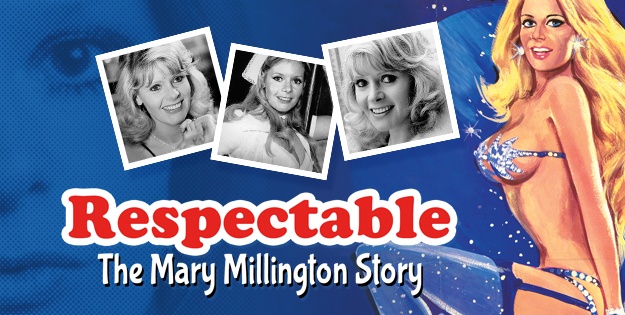
You recently wrote, directed and produced your first film, Respectable - The Mary Millington Story at Pinewood. What was that experience like and how did it feel to be making your own film at Pinewood Studios?

Pinewood is an extraordinary place. On the outside it looks like a cluster of anonymous aircraft hangers, but you look behind the doors and you genuinely see magic being made. I was shooting scenes for my film - and doing all the post-production - in a tiny studio, right next door to Star Wars: The Force Awakens, which was quite a thrill. We’d have Stormtroopers walking past our door, and in my lunchbreaks I’d wander onto the Star Wars set and see the most astonishing things going on. And, at the time, I couldn’t tell anybody what I’d seen! Pinewood is rich with history and I’m very fortunate to have made my film there. To have made my first ever movie at Pinewood was certainly an experience I’ll never forget.

Can you tell me about any projects you have in the pipeline?

Actually I’ve just started pre-production on my next documentary. It’s not set in the ‘X’-rated world this time, although it is based in the 1970s, and there are definite overlaps with my previous project. It’ll be a quite a departure from Respectable – The Mary Millington Story, but there are parallels with Mary’s life. There is sex, showbiz, drama and unbelievable tragedy. All I’ll say it’s a story which has never ever been told before and it’s going to surprise a few people.

Finally, what's your favourite Carry On film?

Well, I’d say without a shadow of a doubt it’s got to be Carry On Behind. I love the contemporary Carry Ons far more than the ‘historicals’. Films like Loving, Abroad, Girls and Behind are so anchored to that particular period of early-1970s’ England – drinking beer, smoking fags, betting on horses, ogling pretty girls. I particularly love Carry On Behind, because, with the absence of Sid James, it really allows Kenneth Connor, Kenneth Williams and Peter Butterworth to shine. The scene where the sexually-frustrated Connor is trying to seduce Joan Sims, with the military music playing on the record player, is one of my all-time favourite scenes. It’s probably Connor’s best-ever performance. However, it’s Elke Sommer who gets the best dialogue. Her speech about "I am keeping a, how you say, dirty caravan. Therefore, I am going round camp looking for scrubbers,” makes me laugh every single time I hear it. I have the poster for Carry On Behind hanging in my hallway. My postman loves looking at it! It’s also one of the best British poster images of the era – the beautiful girl on the bike, flashing her knickers. In many ways that’s exactly what 1970s’ cinema was all about!


Simon’s book Keeping the British End Up: Four Decades of a Saucy Cinema (Titan Books) and his DVD Respectable – The Mary Millington Story (Simply Media) are both available now from Amazon.co.uk. 

Additionally, Respectable is now showing on Netflix in the UK, US, Canada, Australia and New Zealand.

You can follow me on Twitter @CarryOnJoan and also Facebook

Tuesday, 19 January 2016

The Adventures of Liz Fraser


I love Liz Fraser. I think she's a cracking actress who has never put in a dud performance in her life. She's worked with legends of the silver screen such as Sid James, Tony Hancock, Jimmy Edwards, Margaret Rutherford and Peter Sellers. She has appeared in four Carry Ons, countless other classic films such as Double Bunk, Two Way Stretch and I'm All Right Jack and featured in several of the wonderful Hancock's Half Hours on television.

Liz's career endured through the sixties, seventies and eighties although sadly the early flourish of her starring roles in those top quality British comedies didn't continue at such a pace due to changes in the film industry in this country. While Liz was always in demand and guested in many legendary shows, her film career had dried up by the mid 1970s. Liz had made the conscious decision in the mid 1960s to move away from blonde bombshell comedy parts as she wanted to be seen as a versatile character actress. Straight parts in films did materialise but sadly those titles (The Painted Smile; The Americanisation of Emily)  have faded into obscurity. 


In more recent times Liz has commented that had she known in 1963 that the Carry Ons would have continued for the next fifteen years, she may have starred in several more after her original departure after Cabby. Sadly this wasn't the case, although she did subsequently become involved with another infamous series of British film comedies - the Confessions films. I'm no fan of the Confessions films as I've said before but somehow they did manage to secure the services of many top comedy performers including the likes of Irene Handl, Windsor Davies, Ian Lavender, John Le Mesurier, Joan Hickson, Carol Hawkins, Bill Maynard and Richard Wattis. Liz joined the rather rude antics on two occasions, first of all with Confessions of a Driving Instructor in 1976 and then again a year later in Confessions from a Holiday Camp. 

I think I read somewhere that the producer of the Confessions films was frightened to approach Liz to appear in the film as, because of her reputation in those earlier films, he thought she'd turn it down flat. Liz has always been game though and she took up the challenge. Although never going as far as many of the other actresses in those films, her parts in the Confessions comedies were far more raunchy and revealing than any of her other film appearances. By the time Liz appeared in these films she was in her late 40s so good for her I say. 


After demonstrating her willingness to play ball in the Confessions films, Liz went on to appear in several other saucy titles of the era. They included Adventures of a Taxi Driver, Adventures of a Private Eye and Rosie Dixon: Night Nurse. These films all followed a similar pattern to the Confessions comedies. In her autobiography, Liz did not appear to regret making these films, despite wishing she'd been taken more seriously during her acting career. In fact Liz seemed quite proud of them and obviously enjoyed the experience of appearing in those rather rude scenes with the likes of Robin Askwith and Barry Evans. 

I can't help wondering why an actress of Liz Fraser's calibre would go on to make so many of these dubious comedy films. My feeling is there probably wasn't a great deal of other film work around in Britain at the time. That would explain why so many legendary comedy actors chose to appear in them. 


So what do you think of Liz Fraser's roles in those saucy seventies sex comedies? Do you like the genre or would you have preferred Liz to steer clear of that side of the British film industry. 


Please click on the link to vote for Carry On Blogging in the UK Blog Awards


You can follow me on Twitter @CarryOnJoan and on Facebook

Tuesday, 13 October 2015

Keeping The British End Up!


Keeping The British End Up: Four Decades of Saucy Cinema is a fascinating book in which author Simon Sheridan has compiled an exhaustive list of the very best, worst and everything in between that the British film industry produced in all things naughty. My primary interest is of course the Carry On films, so a lot of the content of Simon's book was completely new to me.

I confess straight away that I prefer my comedy a bit more innocent than some of the smut discussed here. I love the saucy seaside postcard humour of the early Carry Ons and my favourite aspects of all these films is neither the situations or the corny gags, but the wonderful casts of classic British character actors who give quality performances again and again. That's probably the one thing the best of the Carry Ons have in common with naughtier films in the genre - somehow they all managed to attract high quality actors.


I'm still amazed that so many classic character actors agreed to appear in what were, let's face it, pretty low budget, pretty badly written and sometimes pretty downright dreadful films! Yet throughout the course of reading Simon's book the roll call of familiar names is a striking feature. They include the likes of Joan Hickson, Diana Dors, Christopher Timothy, Irene Handl, Liz Fraser, Lynda Bellingham, Joanna Lumley, Joan Collins, Roger Lloyd Pack, Warren Mitchell, Jill Gascoine, Leslie Phillips, Chic Murray, Arthur Askey, John Le Mesurier, Judy Geeson, Harry H Corbett and Pamela Stephenson. Quite an array! 

Simon Sheridan's book provides a great introduction as to why the British have a long tradition of saucy humour and double entendres. We then get a run down of all the major cinematic releases in the genre between 1958 and the early 1980s before a discussion of why the saucy film industry died a death after that point. The final main chapter of the book gives us great potted biographies of the main players in the films featured, including many of the actors, actresses, writers, directors and producers. It was fascinating to read and learn so much about some of these extraordinary people.


Of course when we think of this particular genre, we immediately summon up an image of Robin Askwith's cheeky grin, incorrigible antics and sometimes a lot more besides! I love to hate the Confessions films. While they were almost certainly a phenomenon at the time and proved incredibly successful I ultimately loathe them for both stealing the Carry Ons' thunder and forcing the antics at Pinewood to become a lot more explicit. Away from the Confessions pictures, others of the genre included the handsome Barry Evans kick starting the Adventures of... films and Barry Stokes in the rather dreadful Ups and Downs of a Handyman (which also featured Carry On actresses Valerie Leon and Alexandra Dane). 

These films captured the spirit of the time and Simon Sheridan really understands them. You can tell he's a fan and appreciates them for what they are. There's a great deal of affection for the films, the stars and their legacy. As part of this book, Sheridan writes about some of the more X-rated examples which although fascinating to read about, are probably not for this blog!


The Carry Ons are mentioned in Simon's book - Emmannuelle is profiled as probably the only series entry that can be classed as seriously naughty. Thankfully Simon agrees with me that the film is pretty dreadful and the likes of Butterworth, Williams, Connor and Sims are not only out of place but completely wasted in that mess of the movie. While the Carry Ons obviously set the tone for the relaxing of attitudes in British cinema, Barbara Windsor's bra popping in Carry On Camping quite quickly lost its shock value as the 1960s ended the saucy 70s came along.

I would recommend Keeping The British End Up to all fans of British cinema and classic British comedies. It's a wonderful time capsule and provides a really entertaining social history of a climatic period in our recent history. As always, the films produced at a certain time really do speak volumes about the times in which they were made.


Thank Simon, and long may he keep his end up! 

You can visit Simon's website here: www.simonsheridan.com 
Simon is also on Twitter: @SJASheridan 


You can follow me on Twitter @CarryOnJoan and also Facebook

Clicking on the adverts helps to keep this blog going.

Sunday, 11 October 2015

Should Barry Evans have Carried On at Pinewood?


I adore Jim Dale. I think he's a very gifted, talented actor. The Carry Ons were lucky to have him in the majority of the prime 1960s series entries when everything was firing on all cylinders. Jim was that rarity back then - a good looking, funny comedy actor with a natural sense of timing and great physicality. 

It was such a shame when he left the series in 1969 after making Carry On Again Doctor. Much the same as the later films missed Charles Hawtrey, the films following Jim's departure were lacking all the talents only he could bring to the team. Attempts to replace him (if that's what they were) never quite worked out. Julian Holloway was excellent in the films but he never quite got the screen time he deserved. Richard O'Callaghan and Kenneth Cope are both superb actors but neither would ever have committed to the Carry Ons long term. 


I've written before about who could possibly have filled Jim Dale's shoes in the Carry On films. While there were several other actors of his ilk breaking through in the early 1970s, I can't really imagine any of them gelling with the team. Richard Beckinsale was a gorgeous young actor with bucket loads of talent but his skills were probably not rooted in seaside innuendo. Likewise Richard O'Sullivan was a huge star at the time, possibly too big a star to feel the need to join the gang at Pinewood. Robin Askwith, who did play a sort of romantic lead in the dreadful Carry On Girls, ended up going a whole lot further up at Elstree with the Confessions films. Which brings me in a roundabout way to Barry Evans.

Barry Evans is now viewed as a rather tragic figure. His descent into unemployment, depression and a suspicious early death in the late 1990s, not to mention gossip about his personal life are factors that tend to over power the fact that he was an excellent comedy actor. If you erase the awful Mind Your Language ITV sitcom from the late 1970s, he was an up and coming star of film and television by the end of the 1960s. His breakthrough role as the sex-starved Jamie McGregor in the swinging sixties film Here We Go Round The Mulberry Bush opposite Judy Geeson set him on the path to stardom. Barry also found fame as Dr Michael Upton in both Doctor In The House and Doctor At Large for LWT between 1969 and 1971.  

Starring in such a series must have put him on the radar of Peter Rogers and Gerald Thomas at Pinewood, however for whatever reason Evans never made a Carry On appearance. I think he would have been perfect. Sadly by the mid 1970s Barry Evans had been lured to star in a different kind of saucy comedy film. As the star of the awful Adventures of a Taxi Driver in 1975, Evans lost his dignity, not to mention his underpants, in what proved to be a highly popular soft porn comedy film which unbelievably co-starred the likes of Liz Fraser, Ian Lavender, Judy Geeson, Diana Dors and Robert Lindsay. It was very much a continuation of the Confessions style of comedy and began the slippery slope to the career doldrums for Evans. Put it this way, there's a lot more of him on display than just his acting talents...


Despite refusing to star in the sequels (his role being taken by future record producer Christopher Neil), Barry Evans eventually ended up in the dire Under The Doctor the following year, again co-starring with Liz Fraser. There was no going back from this and sadly Evans' was pigeon-holed. Attempts at serious theatre and dramatic parts were fruitless and he ended up in several series of the aforementioned Mind Your Language on ITV. As successful as it was, it was probably not the career path Barry Evans would have chosen. 

So would Barry Evans have faired better if he'd joined the Carry On team? Who knows. I still think he would have made a great bumbling romantic lead in the likes of Carry On Loving, Matron or Abroad. What do you think?


You can follow me on Twitter @CarryOnJoan and also Facebook

Clicking on the adverts helps to keep this blog going.


Monday, 4 May 2015

Was Jim right not to Carry On?


I've been thinking a lot about Jim Dale lately. No, not like that. Well maybe a little bit. He's back in London soon with his one man show which I'm thrilled to have tickets to go and see next month. Having heard from him again through the Carry On Forever documentary it has made me look again at his contribution to the films.

As the romantic lead Jim is just perfect in all the Carry Ons he appeared in. His comedic bumbling and athletic stunts really added an extra dimension to the films in which he starred. My favourites are Cowboy, Doctor and Again Doctor. There was nobody else in the team who could play Jim's parts. It was such a shame when he decided to leave the series after Again Doctor in 1969. 


This was obviously the right thing for him as he went on to have decades of success in other films, but mainly on the West End stage and latterly, years of hits on Broadway. JIm is quoted as saying he moved on because the role he was offered in Up The Jungle (the one eventually played by Terry Scott) was not right for him. Certainly the part of Jungle Boy does not benefit from a great deal of dialogue, but surely the physical aspect is something Jim would have taken to a different level. From a selfish point of view, his decision also robbed us of the image of him in a loin cloth for 90 minutes! Almost unforgivable! 


Undoubtedly the Carry Ons changed after Jim's departure. The 1970s saw them become much saucier with boundaries constantly being pushed further and further. Would this have suited the characters Jim Dale played? I'm not sure. Had he stayed he would have been playing the roles subsequently taken on by the likes of Kenneth Cope, Richard O'Callaghan and Patrick Mower. Can you see Jim starring in the likes of Carry On Loving, Matron and England? Probably not. He did of course return in 1992 for Columbus, but we won't go there...

Another aspect of this is the Carry On producers' failure to replace Jim after his departure. Various actors have a crack at it to varying degrees of success. Roy Castle is great as Captain Keene in Up The Khyber. Julian Holloway was on perfect cheeky chappy form as Jim Tanner in Camping but sadly some of his scenes were cut. O'Callaghan and Cope both excelled in early 1970s offerings but the problem remains, none of these actors stuck with the franchise long term so there was little continuity. For a production team so adept at casting decisions, surely they could have found another young male romantic lead?

Who else was there at the time? Robin Askwith appeared in Carry On Girls before embarking on a career with the Confessions series but he lacked Jim's innocence. Someone like Richard Beckinsale would have been perfect casting, but was he already too big a name  to want to appear in the Carry Ons? Likewise someone like Barry Evans or George Layton could have joined the team. Plenty of options I guess but for whatever reason Jim Dale's shoes were never properly filled. Maybe that's simply because it was an impossible task?


You can follow me on Twitter @CarryOnJoan and also Facebook

Clicking on the adverts helps to keep this blog going.